A weekly newsletter where I share ideas from about nurturing learning and curiosity with technology.
-
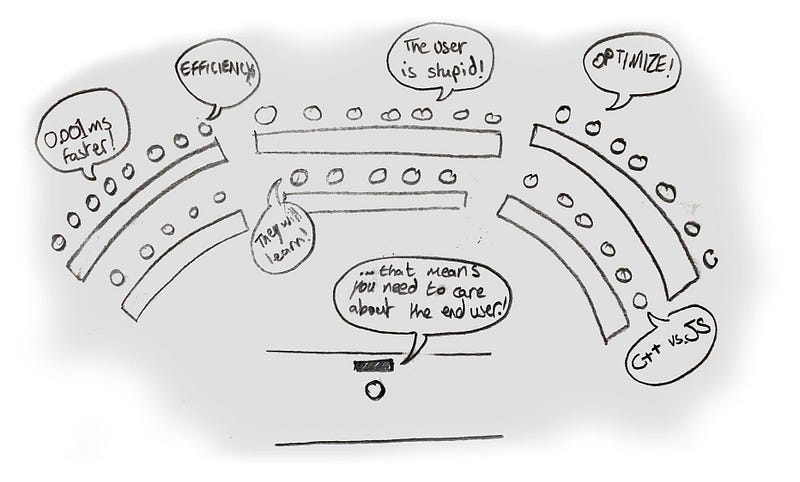
A class in user-centred design for engineers
This summer, I will be tackling a challenge that has thus far been unprecedented to me: teaching design thinking and user-centred design concepts to graduate level engineering students. While this was daunting at first, I have to think of it as a two-pronged applied research endeavor. The first is an ethnography on engineering students and…
-

“Design” in Design Thinking is there to get your attention
Making accessible the creativity that designers typically practice in their jobs in order to allow anyone to innovate has fortunately become in vogue over the past few years. The unfortunate part is that rather than package this creativity in a friendly ‘Ages 2 and up’ box, it got called Design Thinking and simultaneously all designers…
-

Your company vision is like a set of cards in your hand
The power of metaphors in helping you internalize the meanings of certain lessons and the ways in which you want to tackle your goals is something that’s often been discussed. Following an interesting conversation with a co-founder of one of District 3’s graduated startups, e-panneur, a metaphor for how to deal with your new company’s…
-

Trusting your Creativity
Our belief at Particles Design Lab is that creativity is present in all, but with forms that are infinitely different from person to person. Despite common belief, creativity is not limited to those that are artistic. Artists simply exhibit artistic creativity, but would you trust a painter to tell you which formula would be best…
-
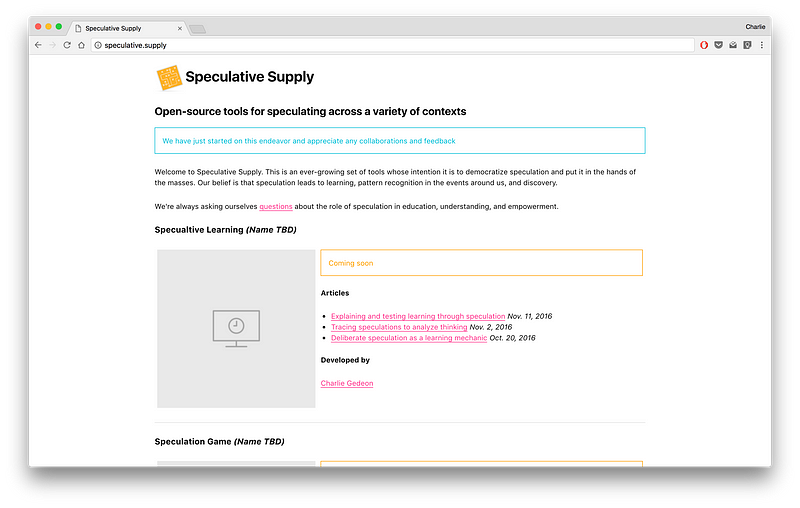
Introducing Speculative Supply
I’m happy to finally push this out. Throughout my year in Copenhagen, and more recently my final project, I have come across a variety of ways to make meaningful an activity that I have always enjoyed immensely: Speculation. Analyzing situations, having thorough discussions about what might come, and debating and discussing potential futures is an…
-
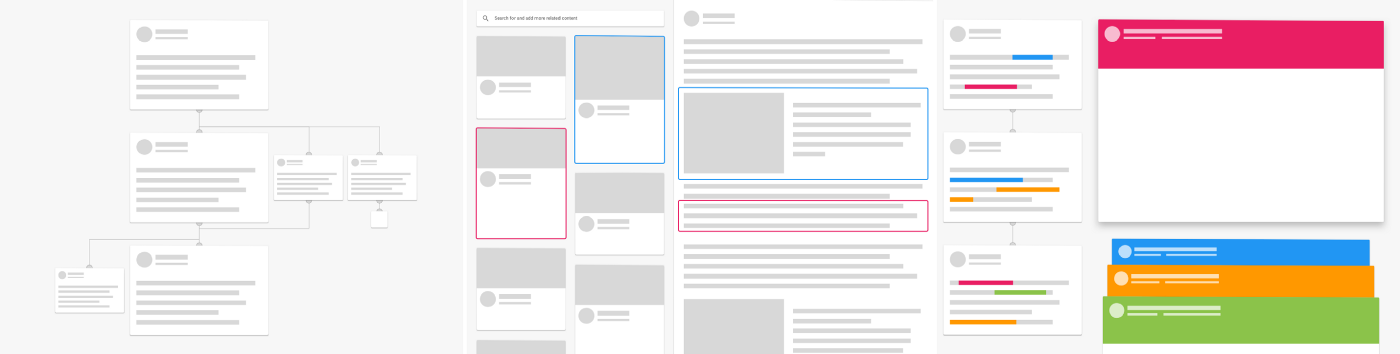
Using details from conversations to enable further education
Outside of smalltalk, most conversation is filled with rich indicators of someone’s personality and interests. Unfortunately because of the lack of the terrible ratio of teachers to students in an average school, the caring attentiveness required to extract meaning from these conversations and apply them to the learners is quite difficult. Essentially, the ability that…
-

Explaining and testing learning through speculation
Schools are meant to prepare learners for the future but they are quite often robbed of that until they leave high school. With the speculative learning method, the idea is to try and have learners invent the future by employing and, in doing so, immediately contextualizing the variety of things they have learned to shape…
-

Like a piece of cake
There is a time in our lives that will feel very much like a piece of cake. It’s not any kind of cake — most certainly not something bland like a spongecake. No. That is both too easily edible and boring, and this kind of cake is definitely neither of those properties. This time is like a…
-
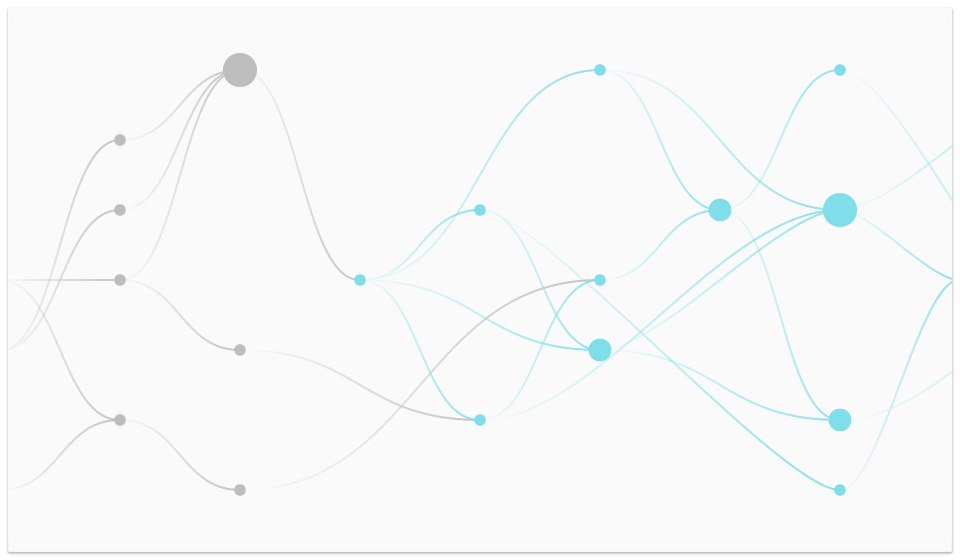
Tracing speculations to analyze thinking
It’s no secret that traditional academic grading is a short-sighted and limited assessment tool for students and teachers alike. The information that can be extracted from a report card is often little more than “this student knows 80% of what we call ‘Math’.” Without going much further into this, as it has been discussed to…
-

Deliberate speculation as a learning mechanic
I wrote recently that I’m stepping away from redesigning school for the time being. Defeated, I was biking back home when I started speculating about the future of the middle eastern world, my heritage. With all the hate directed to and from the Sham region, where would our broken internal politics and exaggerated external influence…