Hello everyone,
This week came together as a single theme related different aspects of relationships in learning.
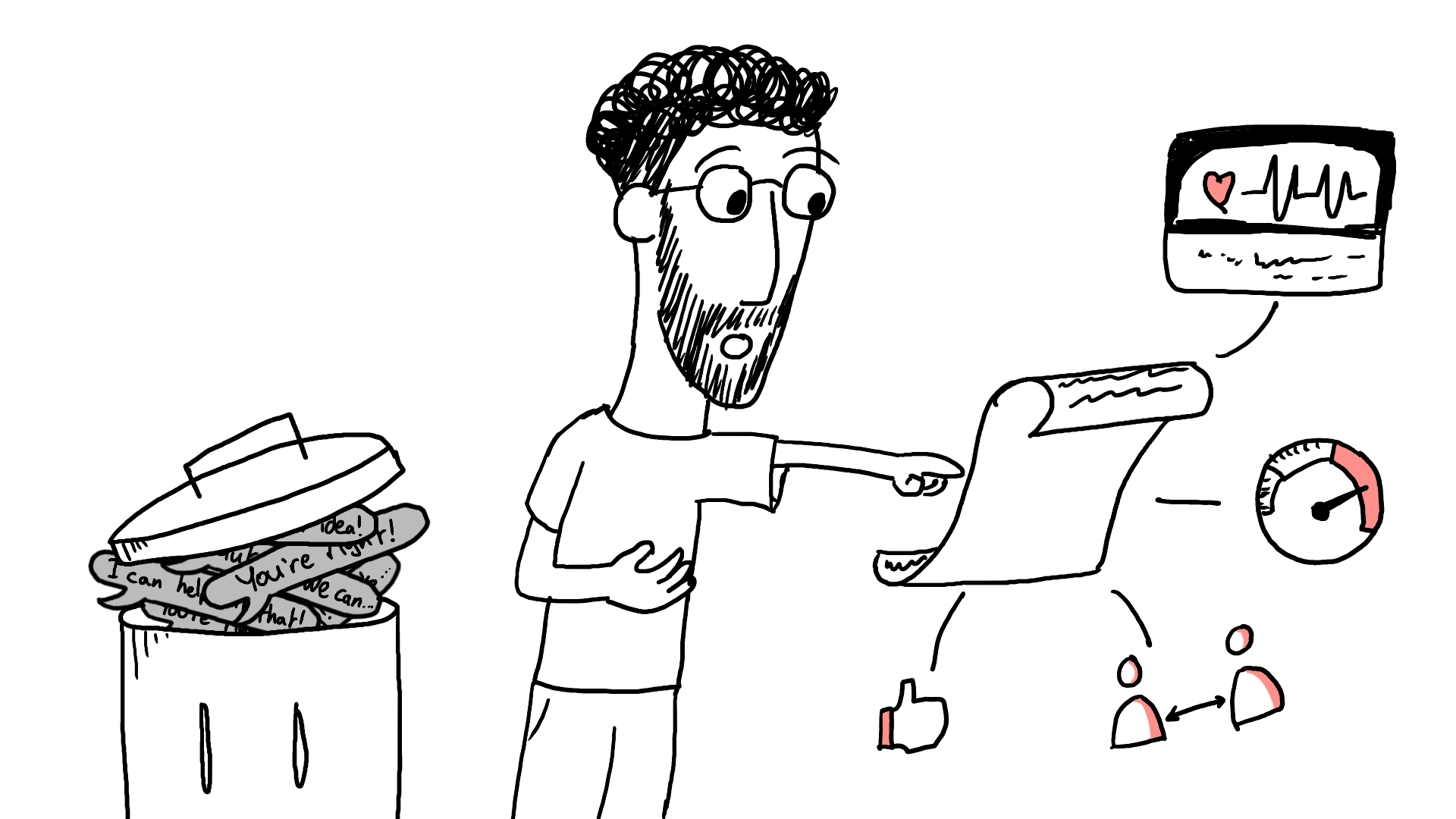
Less chatbots, more layers
A chatbot is a pretty bad tool for anyone trying to develop expert behaviour because they require full conversations each time you want to get anything done. Imagine steering your car with your voice rather than a steering wheel + speedometers. Geoffrey Lit gives a great explanation in Enough AI copilots! We need AI HUDs. The curse of the chatbot is has impacted our imagination in generative AI interfaces for learning. As an instructor, I don’t really care about conversing with an AI to grade some papers. I’d much rather have tools that give me extra layers of information like this experiment I’m exploring for helping deepen conversations during online design classes. Though I explore such things with caution because they are at the top of a slippery slope that ends in using brain scanners on students to make sure they are focused. No, thanks!
Learning is relational
Though we often portray learning as an activity that happens during great, isolated focus with a book, it’s actually a relational activity. That’s why I found Tressie McMillan Cottom’s explanation of why AI chatbots are so potent at seeming educational. Here’s more:
We know for a fact that we tend to trust information or more likely to trust especially novel information when it feels like we get that information in a relationship.
[…] the risk of AI is that it shrouds what is fundamentally just summaries of commonly held interpretations of the text, but it delivers it in a way that feels relational.
I made a 90 second clip of Tressie explaining this to illustrate this against SparkNotes, but if you have 30 minutes, I highly recommend you give the full episode a listen. It framed things in a way that’s actionable and inspiring for the future of social relationships in learning.
Teaching each other is the real alternative
It’s rare to encounter someone who expresses practical ways to rethink education and scale critical thinking with empathy and humility. That’s why Po-Shen Lo’s story is my favourite discovery of the last few months. He goes from thinking of himself as a math teacher to becoming a social entrepreneur that gives bright students tools to teach and learn from each other. My teenage self would be shocked to know that one of my newfound inspirational educators is a mathematician 😂.
That’s all for now!
Let me know if I sparked any new ideas. Sharing is one of the best ways to solidify reflections and learnings :).
Cheers,
Charlie