How did it feel the first time you didn’t understand a new concept? How would you compare that to the first time that concept started to click? How would you describe the way it now feels to know the concept?
I don’t only mean feelings and emotions. Of course there’s bound to be confusion, frustration, etc. That’s all fine, but I’m wondering about a different kind of reflection. One that’s trying to understand the shape of that gap in knowledge. What did the gap physically look like in your mind’s eye? Was it a triangle? A square? A weird blob?
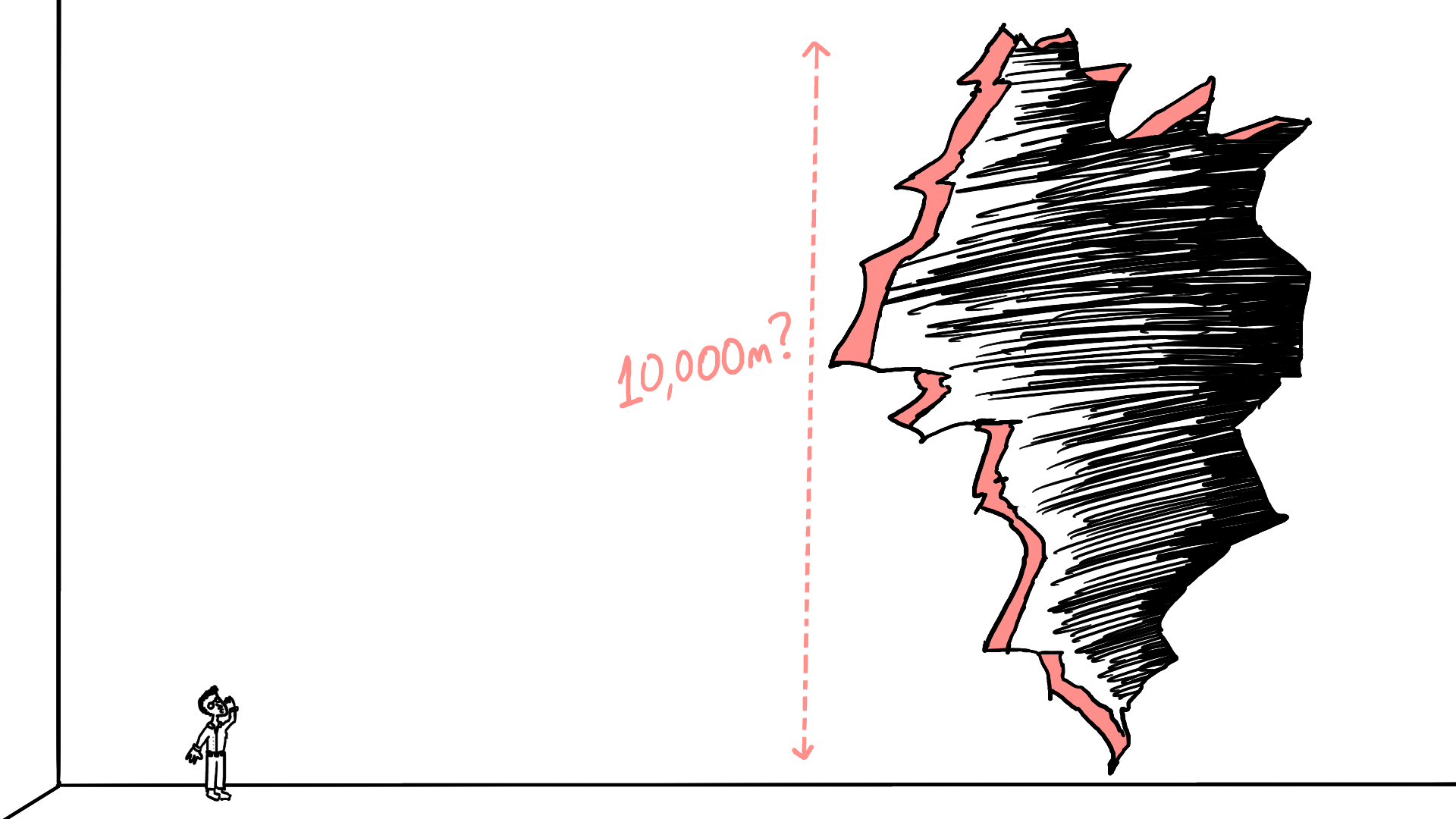
Consider its other properties. Was it heavy? Light? Dark? Pink? Even if it’s hard to truly hone in on a clear vision, take a moment to step back and attempt this exercise in earnest. It’s going to feel strange and uncomfortable, sure. But in so trying, you may notice that bringing the gap into focus will start to become a little easier. Not necessarily that filling the gap will become easier, just that it will become a lot less mysterious. The mystery will shift from being unbearable to something a little more acceptable. You might come to understand that the gap is 10,000 metres tall. This will initially feel insurmountable to fill, but at least you have now determined how tall it is. You now know that it wasn’t just a metre, but it’s not a million either.
The defined size lets you decide whether or not this is a gap that’s worth filling. If you decide you are interested in filling it, its size will help you understand if it’s worth getting some help. You are more empowered to think about who the right person to help you plug that hole might be. Perhaps you know someone who owns a really tall ladder, and has the confidence to climb it to help you fill the top most parts of your knowledge gap. Perhaps the gap isn’t just tall, but once it’s full, it will need to be painted a very specific colour in order to fit in with the rest of what’s in your mind. Without said coat of paint, things will feel out of place — incongruent, if you will. And you know, as the owner of your mind, that this sort of incongruence will ruin you. Sure, some people you know may be okay with incongruence. Some may even crave it. They may think everything “fitting in” feels too stiff and artificial. But they’re not you. They’re not the ones who will be in your mind day in and day out. Your gap-filling, your rules.
This is the value of knowing what you don’t know. Rather, this is the value of making guesses about what you don’t know. The guesses won’t always turn out to be right, but if they got you moving towards an answer, they have already done their job. From where you’re standing, it may have originally felt like the gap was 10,000 metres tall. But upon your friend climbing their ladder, they notice it was actually more like 12,000 metres instead. Now, together, you can decide if some more people need to come in and help patch it up. It’s only in trying to ascertain its height that you were then able to determine the reality of the needed effort.
Admiring the gaps in our knowledge, and giving them size, shape, weight, colour, smell, texture, and sound, is one of the ways we can feel awe at our mind’s ability to live with not knowing. This is the awe needed for learning to happen. The awe needed to grow curiosity. The awe needed to know who you need in your team of merry adventurers in order to fill the gaps in your knowledge. Not for any one utilitarian purpose, but simply for the thrill of learning.